


If you’ve been hearing more and more about Protect Duty recently, you’re not alone. It’s coming up in conversations across events, public spaces and local authorities, and for a lot of people it still feels a bit unclear.
That’s partly because the detail is still being shaped. But there are a few things we do know for certain, and they’re enough to start making sensible decisions now rather than waiting for everything to be finalised.
Protect Duty, often referred to as Martyn’s Law, is focused on how publicly accessible spaces prepare for and respond to the risk of terrorism. That includes thinking carefully about how people move through a space, how vehicles interact with it, and what measures are in place to reduce risk in a way that’s proportionate to the setting.
One of the key points that’s now clear is that the Security Industry Authority, the SIA, will be responsible for overseeing it. So this isn’t just guidance that sits in the background, it’s something that will be monitored and managed more formally.
What that looks like in detail is still evolving, but the direction of travel is fairly obvious. There will be more expectation around how risk is assessed, how decisions are made, and how those decisions translate into something that actually works on the ground.
For a lot of organisers and operators, the question at the moment is when to act.It’s understandable to want to wait until everything is clearly defined. No one wants to invest time and budget in the wrong areas. At the same time, leaving it too late can make things harder than they need to be, especially when it comes to layout decisions and access planning.
What we’re seeing in practice is that the people who are in a stronger position aren’t necessarily doing anything complicated. They’re just getting ahead of the basics.
They’re looking at how their spaces work day to day.
Where vehicles enter and move through the site.
Where people gather and where pressure builds.
And how those two things interact.
We know those are the fundamentals that Protect Duty will be built around, even through we are still waiting to understand how the finer details will land.
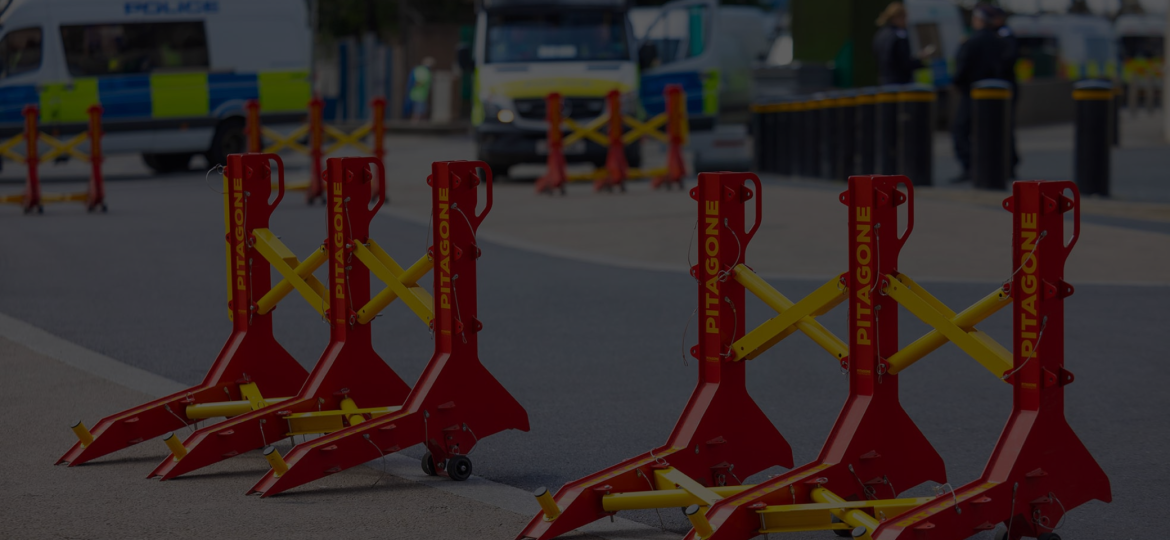
Hostile vehicle mitigation is naturally an important part of that conversation.Not as a standalone add-on, but as something that needs to sit alongside layout, access and overall site design. It’s one thing to have something that looks right on paper, but on the day, conditions change. Access points shift, timings move, and teams need to respond quickly without losing control of the wider setup.
So the conversation is starting to move beyond “do we have measures in place?” to “how well do those measures actually work in practice?”
At Pitagone, a lot of the work we’re doing at the moment is helping clients navigate exactly that. Not jumping straight to solutions, but taking a step back and looking at how their site operates, where the risks sit, and what a proportionate, workable approach looks like. From there, we can shape mitigation strategies that make sense in the real world, not just in documentation.
If you’re trying to make sense of Protect Duty and what it means for your site or event, the honest answer is that you don’t need to have everything figured out yet, but it is worth starting the conversation.Even a simple review of your current setup can highlight where things are already strong and where a few adjustments could make a big difference.
If it would be helpful to talk it through, sense-check your plans, or just get a clearer picture of what this might mean in practice, we’re always here for a conversation.